In today’s competitive manufacturing landscape, packaging is more than protection—it is communication, compliance, and trust. One of the most critical elements printed on plastic packaging is the expiry date.
Choosing the right expiry date printer for plastic is not just a technical decision; it is a strategic investment that supports efficiency, brand reputation, and long-term growth.
By understanding materials, production conditions, and available printing technologies, manufacturers can confidently select a solution that aligns with their packaging goals and inspires operational excellence.
The Unique Challenges of Printing on Plastic Surfaces
Printing expiry dates on plastic is fundamentally different from printing on paper or cardboard. Plastic surfaces vary widely, and this diversity demands adaptable and reliable coding solutions.
Variations in Plastic Material
Some plastics are smooth and non-porous, while others are flexible or treated with coatings. An effective expiry date printer for plastic must be compatible with these variations to ensure strong adhesion, legibility, and resistance to smudging or fading.
For example, flexible films used in food packaging require fast-drying inks, while rigid containers may require codes that withstand handling, moisture, and temperature changes. Understanding your plastic material is the first step toward reliable expiry date coding.
Production Environment
Beyond material type, the production environment plays a major role in print performance. High-speed lines, dusty factories, humid filling rooms, or washdown conditions all affect print performance. Vibrations, line speed fluctuations, and limited space can challenge even the most advanced systems.
A well-chosen expiry date printer for plastic is designed to perform consistently in real-world conditions, ensuring uptime, reducing rework, and keeping production flowing without compromise.
Printer Technologies for Plastic Expiry Date Coding
Modern coding solutions offer multiple technologies, each with unique strengths. Selecting the right technology depends on your packaging material, production speed, and quality expectations.
Continuous Inkjet (CIJ): Best for High-Speed & Non-Porous Plastics
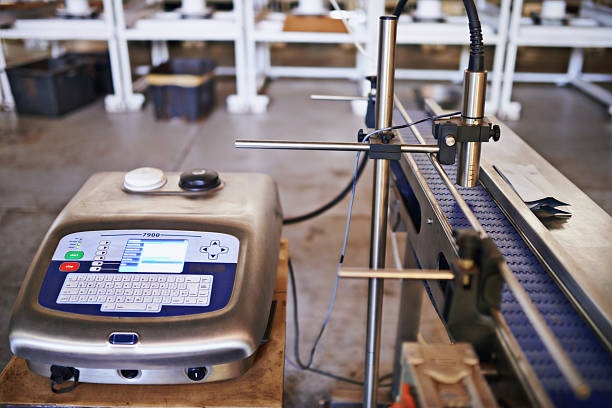
CIJ printers are widely used on fast-moving production lines. They excel at printing on non-porous plastics such as PET bottles, caps, and films.
CIJ technology uses fast-drying inks that adhere well to smooth surfaces, even in humid environments. It is flexible, supports multiple lines of text, and prints on curved or uneven surfaces, making it ideal for demanding, high-volume operations.
Thermal Inkjet (TIJ): Best for High-Resolution Codes
When print clarity and aesthetics are top priorities, TIJ printers stand out. They deliver high-resolution text, barcodes, and QR codes, making them suitable for premium packaging and regulated industries.
As an expiry date printer for plastic, TIJ works best on treated plastics, labels, or secondary packaging where high-quality codes are essential. With minimal maintenance and simple cartridge changes, TIJ technology supports efficiency and precision in modern production environments.
Laser Marking for Specific Plastic Types
Laser marking offers a permanent, ink-free solution by altering the surface of the plastic itself. It is ideal for certain plastics that respond well to laser energy, such as specific PET or HDPE formulations.
While not suitable for all materials, laser systems provide exceptional durability and low operating costs over time. For brands focused on sustainability and long-term code permanence, laser marking can be a powerful alternative to traditional expiry date printers for plastic.

Match the Technology to Your Packaging Needs
No single solution fits every application. The key to success lies in matching the technology to your specific packaging and production requirements.
Based on Packaging Type
Rigid containers, flexible films, sachets, and labels all demand different approaches. Bottles and jars often benefit from CIJ printers, while flat surfaces and labels are ideal for TIJ solutions. Understanding your packaging format ensures that your expiry date printer for plastic delivers consistent, readable results across all products.
Based on Production Speed & Workflow Requirements
High-speed lines require printers that can keep up without sacrificing print quality. CIJ technology is well-suited for continuous, fast-moving production, while TIJ systems integrate seamlessly into moderate-speed lines with frequent changeovers.
Workflow efficiency also plays a critical role. Easy integration, quick message changes, and minimal downtime all contribute to smoother operations and improved productivity.
Based on Code Durability & Print Quality Needs
Some products require expiry dates that remain legible throughout extended distribution cycles, exposure to moisture, or friction during transport. In these cases, ink selection, adhesion, and marking method are critical.
Whether your priority is durability, aesthetics, or regulatory compliance, the right expiry date printer for plastic will balance print quality with long-term performance.
Why DSI Is a Reliable Partner for Plastic Expiry Date Coding
Choosing the right printer is only part of the journey. Having a trusted partner ensures long-term success. DSI understands the complexities of plastic packaging and provides tailored solutions that align with your production goals.
With expertise across CIJ, TIJ, and advanced coding systems, DSI helps manufacturers select, implement, and maintain the right expiry date printer for plastic to meet their unique needs. From consultation to after-sales support, DSI delivers confidence, reliability, and continuous improvement across every production line.
To deepen your understanding of practical applications, especially in beverage and FMCG industries, you can read more about PET Bottle Coding and Marking: Best Practices for Plastic Packaging, where real-world insights meet proven solutions. And if high-resolution, flexible coding is part of your future strategy, see a complete list of thermal inkjet printer here: https://dsi-printer.co.id/products/thermal-inkjet-printer/
References
https://www.videojet.co.uk/uk/homepage/resources/glossary/product-coding.html
https://www.fao.org/food-safety/en/
https://plastics.ulprospector.com/properties/
https://www.mouser.com/blog/industrial-inkjet-printing-technologies-applications