In the food industry, the sell by date plays a critical role in ensuring product freshness, inventory management, and consumer safety. While often misunderstood as a strict expiration deadline, this date primarily serves as a guideline for retailers rather than end consumers.
For manufacturers and retailers, understanding how the sell by date functions is essential to maintaining compliance, reducing waste, and optimizing supply chain operations.
What Does a Sell By Date Actually Mean?
To fully understand its role, it is important to clarify what a sell by date represents. The sell by date indicates the last day a retailer should display a product for sale to ensure optimal freshness for consumers.
Unlike expiration dates, the sell by date does not necessarily mean the product is unsafe after that point. Instead, it acts as a guideline for stock rotation and shelf management.
Many products remain safe to consume after the sell by date if stored properly. However, from a manufacturing and retail perspective, this date is critical for ensuring consistent product quality and customer satisfaction.
Why Sell By Dates Matter in the Food Supply Chain
In modern food production, accurate date labeling is essential for maintaining efficiency across the entire supply chain. Sell by dates help retailers manage inventory effectively by ensuring older products are sold first. This supports proper stock rotation and minimizes the risk of expired goods remaining on shelves.
From a logistics standpoint, sell by dates are also essential for supply chain traceability. They allow manufacturers and distributors to track product movement, identify batches, and respond quickly in case of recalls.
In high-volume production environments, where thousands of units may be processed per hour, even small inaccuracies in date coding can lead to large-scale operational issues. Therefore, precision in printing sell by date information is not only a compliance requirement but also a key factor in maintaining efficiency.
Sell By Date vs Use By Date vs Expiry Date
Although often used interchangeably, these terms have distinct meanings that impact both production and retail practices. Here are the differences:
- Sell by date: Indicates how long a product should be displayed for sale
- Use by date: Refers to the last recommended date for safe consumption
- Expiry date: Typically indicates when a product should no longer be used at all
Understanding these differences is essential for manufacturers when designing packaging and labeling systems. Mislabeling can create confusion, increase liability risks, and negatively affect consumer trust.
Regulatory and Industry Considerations
Food labeling regulations vary across regions, but all emphasize accuracy, clarity, and consistency. Manufacturers must ensure that sell by date information is correctly formatted, legible, and compliant with local standards.
In many markets, incorrect or missing date codes can result in penalties, product recalls, or restrictions on distribution. Regulatory bodies also require that date codes remain readable throughout the product lifecycle, including transportation and storage.
Beyond compliance, industry best practices focus on maintaining consistency across production lines. This includes synchronizing date coding with batch tracking systems and ensuring that labeling aligns with product shelf-life data. Accurate sell by date implementation supports both regulatory compliance and operational reliability.
Read About: Expiry Date Printers for Plastic: Match the Technology to Your Packaging Needs
How Sell By Dates Are Printed on Packaging
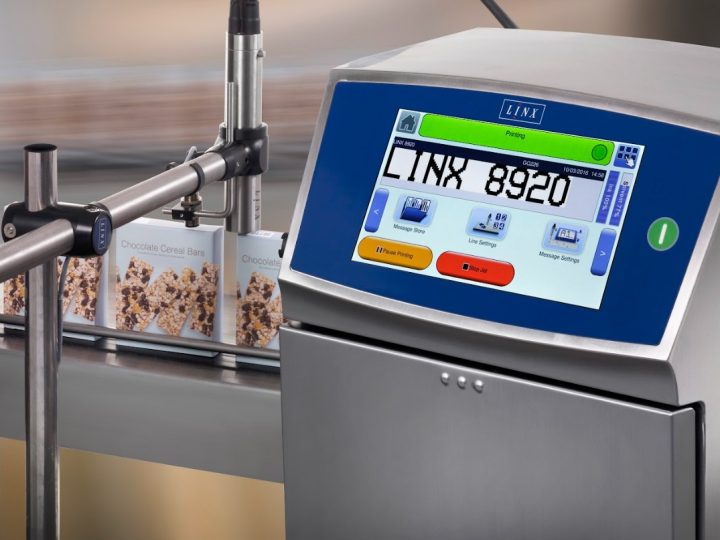
In industrial production, sell by dates are applied using automated coding systems integrated directly into the production line. Modern production lines rely on digital coding technologies that print variable data in real time. These systems are connected to production databases, ensuring that each product receives accurate and consistent information.
Technologies such as Continuous Inkjet (CIJ) and Thermal Inkjet (TIJ) are commonly used to print sell by date information on packaging materials including plastic, glass, and cartons.
High-speed lines, especially in beverage and FMCG industries, may process hundreds or even thousands of units per minute. In such environments, coding systems must deliver:
- High-speed performance without slowing production.
- Fast-drying ink to prevent smudging.
- Clear and consistent print quality.
Reliable coding systems ensure that sell by date information remains legible throughout distribution and storage.
Common Challenges in Printing Sell By Dates
Despite advances in technology, manufacturers often encounter challenges when printing sell by date information. Understanding these issues is key to maintaining consistent output.
Common challenges include:
- Smudged or faded prints on non-porous surfaces.
- Misaligned codes due to incorrect positioning.
- Equipment downtime affecting production flow.
- Inconsistent print quality at high speeds.
These problems can lead to rejected products, increased waste, and compliance risks. In high-volume operations running continuously, even minor coding errors can have significant financial impact.
Addressing these challenges requires selecting the right coding technology and ensuring proper system configuration.
Partner with DSI for Reliable Date Coding Solutions
Ensuring accurate sell by date marking requires more than basic equipment. It involves selecting the right technology, integrating it into your production line, and maintaining consistent performance under demanding conditions.
DSI provides advanced industrial coding solutions designed to deliver precise, high-speed marking for food manufacturing and retail packaging.
With the right combination of technology and technical support, your production line can maintain consistent code quality while meeting regulatory and operational demands.
To explore solutions tailored to your production needs, see a complete list of thermal inkjet printer here. With the right system in place, you can ensure every product leaving your line meets both compliance standards and customer expectations.
References:
- https://www.southernliving.com/sell-by-vs-use-by-vs-best-by-7372738
- https://www.mdanderson.org/cancerwise/sell-by-best-by-use-by-dates–5-things-to-know.h00-159622590.html
- https://news.christianacare.org/2013/09/food-safety-sell-by-date-explained/
- https://nclnet.org/understanding_sell_by_dates/